

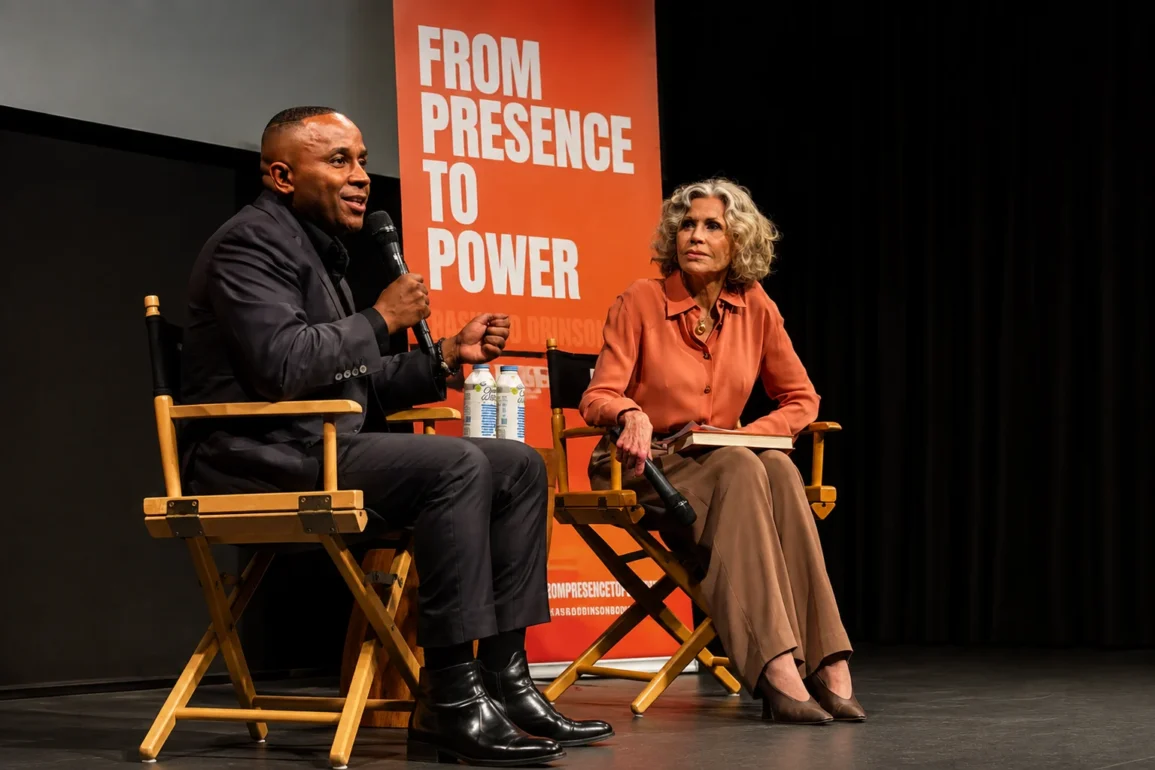
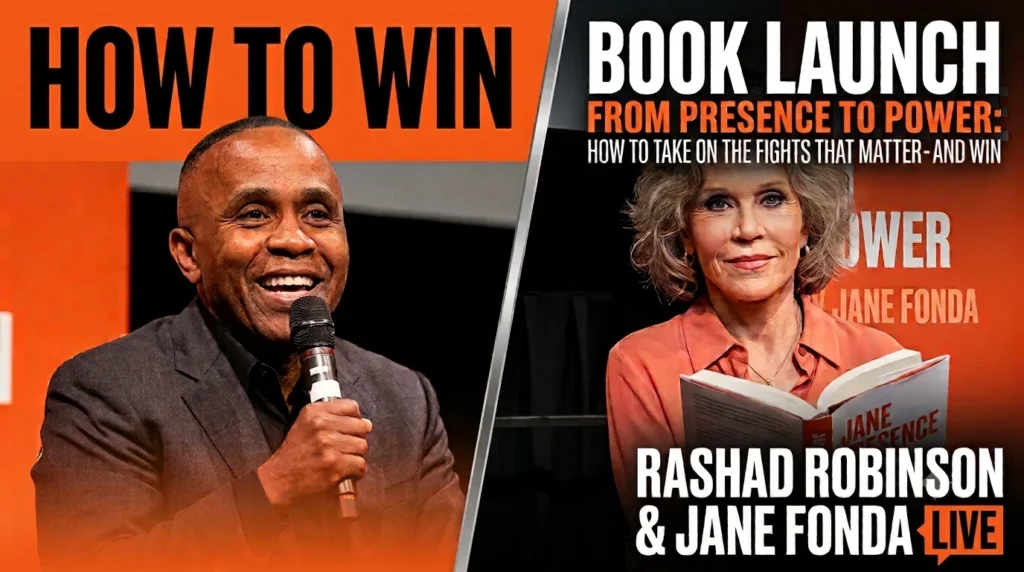
In an age where social media engagement often defines success, it’s easy to believe that visibility equals influence. Rashad Robinson argues the opposite. During a live discussion at New York City’s Strand Bookstore celebrating the release of From Presence to Power: How to Take on the Fights That Matter and Win, Robinson joined legendary activist Jane Fonda and organizer Alicia Garza for a conversation about why many movements generate attention but never achieve lasting change. His message was clear from the start: awareness opens the door, but only organized power changes what happens next.
Throughout the evening, Robinson challenged the audience to rethink how they define success. Headlines, viral moments, celebrity endorsements, and packed demonstrations can inspire people to act, but they rarely force institutions to change on their own. Lasting victories require strategy, organization, and a willingness to influence the people who make decisions.
Presence Gets Attention. Power Changes the Rules.
Jane Fonda connected immediately with Robinson’s central argument by reflecting on her experience organizing Fire Drill Fridays in Washington, D.C. The weekly demonstrations attracted national media coverage, drew thousands of supporters, and even led to repeated arrests. Despite all of that attention, Congress still failed to pass meaningful climate legislation.
“You talk about moving from ‘presence’ to ‘power,'” Fonda said. “I experienced this during Fire Drill Fridays in D.C. We had huge press coverage and got arrested every week, but we still didn’t have the power to pass climate legislation until we formed a PAC to elect climate champions. How do you define that difference?”
Robinson explained that many organizations mistake visibility for influence because both can feel like progress. “Presence is visibility, followers, likes, and headlines,” he said. “It attracts energy, but presence fades. Power is the actual ability to change the rules and force institutions to do things they otherwise wouldn’t do.”
He believes movements lose momentum when they stop at awareness. “If we generate attention without giving people a pathway to leverage power, we do a disservice to everyone who showed up.”
The lesson extends well beyond politics. Businesses, nonprofits, community groups, and advocacy organizations all benefit from public attention, but recognition alone doesn’t create lasting influence. Robinson argues that visibility should always lead people toward meaningful action instead of becoming the final objective.
Changing Results Requires Changing Roles
One of the evening’s strongest moments came when Fonda quoted a line directly from Robinson’s book.
“To get different results, we need different rules, and to get different rules, we need to redefine roles.”
She asked how that philosophy shaped efforts to reform the criminal justice system.
Robinson explained that documentaries, investigative reporting, and viral videos had already exposed the realities of mass incarceration. Millions of Americans understood the problem, yet many local prosecutors continued operating without public scrutiny. Organizers eventually realized that more than 80 percent of District Attorneys ran unopposed. Instead of spending another election cycle raising awareness, they shifted their energy toward electing prosecutors committed to reform.
That strategy changed more than individual elections. It reshaped what communities expected from District Attorneys. Rather than measuring success only through convictions, voters began asking whether prosecutors could also reduce unnecessary incarceration and create a fairer justice system. Robinson argued that changing those expectations transformed how laws were enforced without waiting for statewide legislation.
For him, that’s what power looks like. It changes incentives, influences decision-makers, and produces results that continue long after public attention fades.
When Injustice Gets Mistaken for Misfortune
Before the discussion began, Robinson read one of the book’s most compelling passages. It centered on a simple question: how does the language we use shape the solutions we accept?
“When something is unfortunate, we blame life, fate, or nature. When something is unjust, we blame people. Unfortunate realities lead to charitable solutions—consolation prizes for victims—rather than solutions that prevent injustices from happening.”
He illustrated the point by discussing Flint, Michigan. Delivering bottled water helps families survive a crisis, but replacing contaminated lead pipes prevents the crisis from continuing. One response offers relief. The other creates accountability.

That distinction sits at the heart of From Presence to Power. Robinson encourages readers to stop asking only who needs help and begin asking who created the conditions that made help necessary in the first place.
Racism Works Because Someone Benefits From It
Another thought-provoking moment came when Fonda asked Robinson why he describes racism as more than prejudice. His answer shifted the discussion away from individual attitudes and toward systems that reward inequality.
“When we pretend race is a side issue or think class alone explains everything, we end up with bad strategy,” Robinson said.
He argued that harmful systems often survive because someone profits from them, whether financially, politically, or socially. If racial division continues to produce benefits for powerful institutions, then confronting those incentives becomes just as important as changing individual opinions.
“If our opponents use racial division as their core strategy, racial justice must be ours,” Robinson said. “We have to make injustice unprofitable for corporations and institutions if we want long-term change.”
Rather than asking readers to focus solely on prejudice, Robinson encourages them to examine how power operates. Who benefits? Who makes the decisions? What incentives keep the system in place? Those questions, he argues, produce stronger strategies than outrage alone.
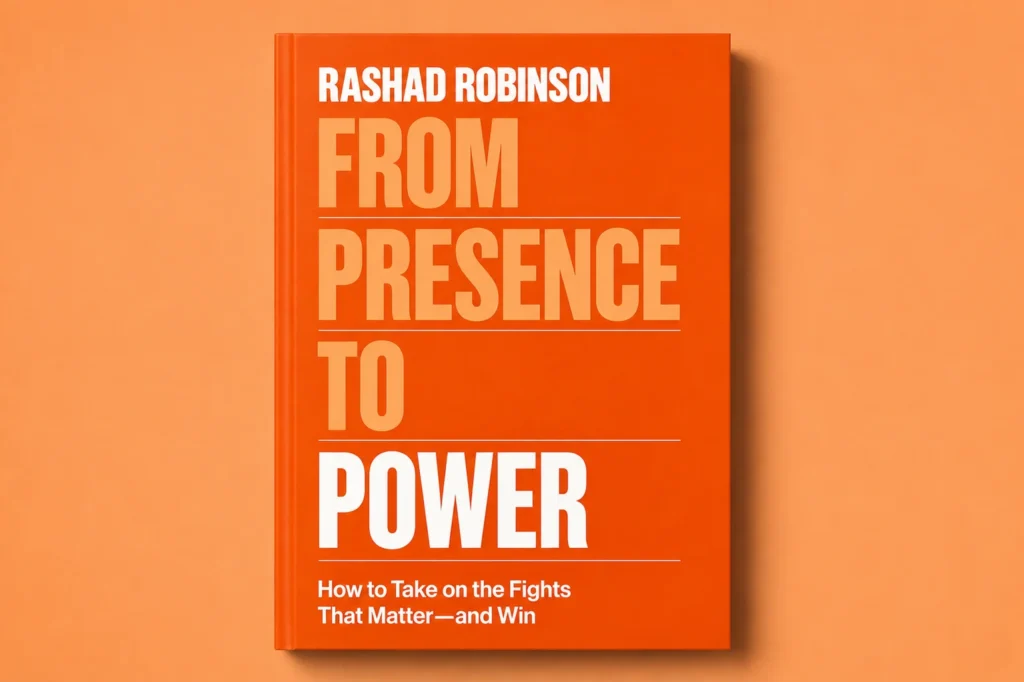
Book: From Presence to Power: How to Take on Fights That Matter and Win by Rashad Robinson
